Medical cannabis has changed the healthcare landscape in Pennsylvania over the past few years. Patients dealing with chronic illnesses now have an alternative path for relief, and it’s becoming more accepted by both doctors and the public.
Understanding the qualifying conditions for a medical cannabis card in Pennsylvania is the first step for anyone considering this option. Without proper knowledge, many eligible patients miss out on potential treatment simply because they’re unsure if they qualify.
Overview of the Medical Marijuana Program
Pennsylvania legalized medical marijuana in 2016 through the Medical Marijuana Act. Since then, the program has expanded steadily. Today, thousands of patients benefit from regulated access to cannabis products.
The program is managed by the Pennsylvania Department of Health. It ensures that patients receive safe, tested, and controlled cannabis products through licensed dispensaries.
Why Understanding Qualifying Conditions Matters
Not every health issue qualifies for medical cannabis use. That’s why knowing the approved conditions is crucial.
Here’s why it matters:
- Saves time during application
- Helps you prepare medical documentation
- Improves chances of approval
- Ensures compliance with state laws
In short, clarity equals success when applying.
What Is a Medical Cannabis Card?
A medical cannabis card is an official identification issued by the state. It allows patients to legally purchase and use medical marijuana for approved health conditions.
Benefits of Having a Medical Cannabis Card
Having a card isn’t just about legality—it comes with several advantages:
- Access to licensed dispensaries
- Higher-quality and lab-tested products
- Guidance from trained staff
- Legal protection under state law
Additionally, cardholders often receive personalized treatment recommendations.
Legal Protections for Patients
Pennsylvania law protects registered patients from legal penalties for possessing approved amounts of medical cannabis.
However, it’s important to note:
- Recreational use is still illegal
- Driving under the influence is prohibited
- Workplace policies may still apply
So while the card provides protection, it comes with responsibilities.
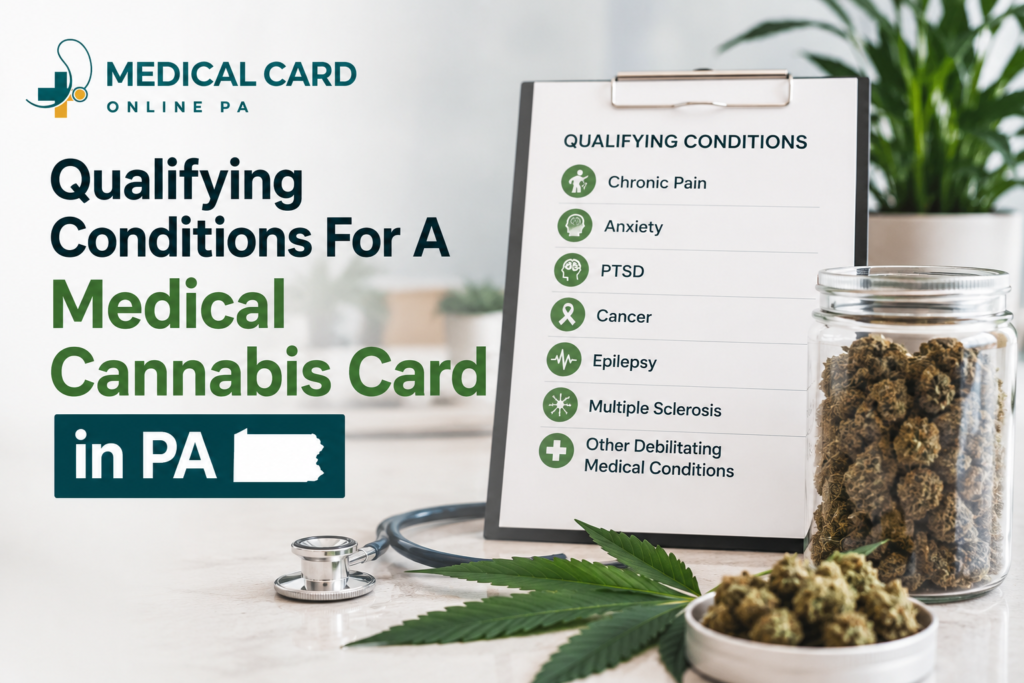
Complete List of Qualifying Conditions For A Medical Cannabis Card in Pennsylvania
This is where things get specific. The state provides a clear list of approved conditions. Let’s break them down for better understanding.
Chronic and Severe Pain Conditions
Chronic pain is one of the most common reasons patients apply.
Qualifying pain-related conditions include:
- Severe chronic pain
- Neuropathic pain
- Pain caused by injury or illness
Many patients report improved quality of life after starting cannabis therapy.
Neurological Disorders
Neurological issues often respond well to medical cannabis.
Approved conditions include:
- Epilepsy
- Parkinson’s disease
- Multiple sclerosis
- ALS (Amyotrophic Lateral Sclerosis)
These conditions often involve muscle spasms or seizures, which cannabis may help manage.
Mental Health Conditions
Mental health has become a major focus in recent years.
Qualifying mental conditions include:
- Anxiety disorders
- PTSD (Post-Traumatic Stress Disorder)
- Autism
Cannabis may help reduce symptoms like stress, panic, and insomnia.
Cancer and Terminal Illnesses
Patients undergoing intense treatments often qualify.
Conditions include:
- Cancer
- Terminal illnesses
- HIV/AIDS
Medical cannabis is commonly used to manage:
- Pain
- Nausea from chemotherapy
- Loss of appetite
Autoimmune and Inflammatory Diseases
Inflammation plays a role in many chronic diseases.
Qualifying conditions include:
- Crohn’s disease
- Ulcerative colitis
- Lupus
These conditions often involve severe discomfort and digestive issues.
Other Recognized Conditions
The state also includes a variety of additional conditions:
- Glaucoma
- Sickle cell anemia
- Opioid use disorder
- Severe insomnia
For the most current list, visit the official Pennsylvania Department of Health website:
https://www.health.pa.gov
How to Get a Medical Cannabis Card in Pennsylvania
Getting a card isn’t complicated, but you must follow the correct steps.
Step-by-Step Application Process
Here’s how it works:
- Register online with the state
- Visit a certified physician
- Get a medical evaluation
- Receive certification
- Pay the state fee
- Receive your card
Once approved, you can start purchasing from dispensaries.
Documents Required
To apply, you’ll need:
- Valid ID (driver’s license or state ID)
- Proof of residency
- Medical records
- Physician certification
Having everything ready speeds up the process.
Cost and Renewal Process
Costs may vary slightly, but generally include:
| Item | Estimated Cost |
|---|---|
| Physician Consultation | $100 – $200 |
| State Fee | $50 |
| Renewal Fee | $50 annually |
Renewal requires another doctor visit, so plan ahead.
Role of Physicians in Certification
Doctors play a crucial role in determining eligibility.
How Doctors Evaluate Patients
Certified physicians review:
- Medical history
- Current symptoms
- Previous treatments
They assess whether cannabis could be beneficial.
Importance of Medical Records
Strong documentation increases approval chances.
Bring:
- Diagnosis reports
- Prescription history
- Lab results
The more evidence you provide, the better.
Limitations and Restrictions
Even with approval, there are limits.
What Conditions Do Not Qualify
Not all health issues are eligible.
Non-qualifying examples:
- Mild headaches
- Temporary injuries
- General fatigue
The state focuses on serious, ongoing conditions.
Legal Boundaries for Usage
Patients must follow strict rules:
- No public consumption
- No sharing with others
- No crossing state lines
Breaking these rules can result in penalties.
Tips for a Successful Application
A little preparation goes a long way.
Common Mistakes to Avoid
Avoid these pitfalls:
- Incomplete documentation
- Choosing non-certified doctors
- Missing renewal deadlines
Best Practices for Approval
Improve your chances by:
- Gathering detailed medical records
- Being honest about symptoms
- Following physician recommendations
FAQs
1. What are the main qualifying conditions for a medical cannabis card in Pennsylvania?
The main qualifying conditions include chronic pain, cancer, PTSD, epilepsy, and autoimmune diseases.
2. Can anxiety alone qualify for a medical cannabis card?
Yes, anxiety disorders are recognized as qualifying conditions if diagnosed by a physician.
3. How long does it take to get approved?
Most applications are approved within a few days after physician certification and payment.
4. Do I need a doctor’s referral?
Yes, a certified physician must evaluate and approve your condition.
5. Can minors apply for a medical cannabis card?
Yes, but they must have a caregiver registered with the program.
6. Is medical cannabis covered by insurance?
No, insurance typically does not cover medical marijuana costs.
Conclusion
Understanding the qualifying conditions for a medical cannabis card in Pennsylvania is essential for anyone considering this treatment option. With the right knowledge, proper documentation, and guidance from certified physicians, the process becomes straightforward.
Medical cannabis offers hope and relief for many patients dealing with chronic and serious conditions. As the program continues to evolve, more people may gain access to this alternative therapy.
If you believe you qualify, take the next step—consult a certified physician and begin your journey toward better health.
This guide is for informational purposes only and does not substitute professional medical advice. Always consult a licensed healthcare provider before starting any treatment.
